
Quick Reference Guide
Care, Cleaning & Maintenance
Natural Stone • Marble • Quartz • Porcelain • Plumbing Fixtures
General Tips:
- Use cutting boards to avoid scratches.
- Use trivets and coasters to protect against heat and moisture.
- Wipe spills quickly to maintain longevity and appearance.
- Choose gentle, pH-neutral cleaners for everyday maintenance.
- Avoid harsh chemicals and abrasive tools across all materials.
- Routine gentle cleaning greatly extends the life and beauty of your surfaces and fixtures.
- Follow manufacturer warranties for brand‑specific care recommendations.
Cleaning Tips by Material
Natural Stone:
- Clean with mild soap or pH-neutral cleaner; use soft cloth.
- Blot spills immediately; avoid acids and abrasives.
- Seal regularly; reseal when water darkens stone.
Marble:
- Clean with pH-neutral marble cleaner.
- Acidic products cause etching, blot spills quickly.
- Seal regularly; professional polishing may be needed.
Quartz:
- Clean with mild soap; wipe spills promptly.
- Always use trivets; avoid high heat and fireplaces.
- Avoid harsh chemicals and abrasives.
Porcelain/Sintered Stone:
- Clean with mild soap; soft cloth only.
- Highly heat-resistant; use cutting boards.
- Avoid steel wool and HF acid cleaners.
Stainless Steel Sinks:
- Clean with mild soap; rinse and dry.
- Use sink grids; avoid bleach and abrasives.
Composite Sinks:
- Clean with mild soap; rinse to prevent buildup.
- Use composite-safe cleaners; avoid extreme heat.
Porcelain Sinks:
- Clean with mild soap; baking soda for stains.
- Avoid abrasives and dropping heavy cookware.
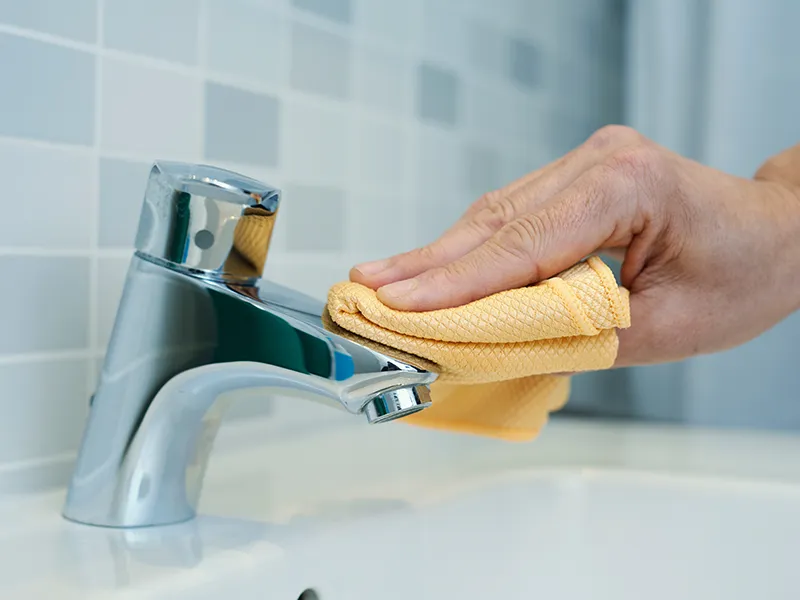
Faucets:
- Wipe with warm water; dry to prevent spots.
- Avoid harsh chemicals and abrasives.
Full reference guide
Click below for the view the full reference guide.
Natural Stone • Marble • Quartz • Porcelain • Sinks • Plumbing Fixtures
Care, Cleaning & Maintenance Guide
At GMD Surfaces, we want your countertops to perform beautifully for years to come. This guide provides clear, simple recommendations for the care and maintenance of all natural stone, marble, and quartz surfaces, regardless of color, finish, manufacturer, or supplier.
Natural Stone
(Granite, Quartzite, Soapstone, and Other Natural Materials)
Daily Cleaning
- Use soft cloth or sponge with warm water and a pH-neutral stone cleaner or mild dish soap.
- Avoid abrasive pads, scouring powders, or any cleaner labeled as acidic, alkaline, or containing bleach.
Spill Management
- Blot spills immediately—do not wipe to avoid spreading.
- Pay special attention to oils, wine, citrus, vinegar, and coffee.
Stain Prevention
- Use coasters, trivets, and cutting boards.
- Do not place hot pots directly on the surface—thermal shock is rare but possible.
- Do not place hot appliance or warning plates directly on the surfaces – Thermal shock may occur.
Sealing
- Natural stone surfaces MUST be sealed periodically; frequency depends on usage and the specific stone.
- Test by applying a few drops of water. If the water darkens the stone within a few minutes, it may be time to reseal.
- Use a high-quality penetrating sealer recommended for natural stone.
Deep Cleaning
- Use a stone-safe cleaner or degreaser formulated for natural stone surfaces.
- If stains occur, use a stone poultice suitable for the stain type.
Avoid
- Vinegar, lemon juice, ammonia, bleach, or any acidic/abrasive cleaners.
- Wax-based products that can create buildup.
Marble
Marble is a natural material with unique veining and beauty, but it is softer and more porous than other stones. It requires specific care to keep it looking great.
Daily Cleaning
- Clean with warm water and a pH-neutral, marble-specific cleaner.
- Use soft cloths or non-abrasive sponges.
Spill Management
- Blot spills immediately—do not wipe to avoid spreading.
- Pay special attention to oils, wine, citrus, vinegar, and coffee.
Etching Awareness
- Acidic substances (citrus, wine, coffee, soda, tomato products, vinegar) can leave dull spots called etches.
- Etching is chemical—not a stain—and can be minimized but not fully prevented. Etching is due to the fact that Marble stones are calcium-based stones and are sensitive to acidic products. If the surface is etched; then it will need to be repolished.
Spill Management
- Blot spills immediately, especially anything acidic.
- Do not scrub etched areas; consult a stone professional for polishing if needed.
Sealing
- Marble should be sealed regularly, though sealing does not prevent etching.
- A penetrating sealer can help reduce staining absorption.
Avoid
- Abrasive or acidic cleaners—these can dull or damage marble.
- Using marble as a cutting surface.
- Long-Term Maintenance
For scratches or etching, professional honing and polishing can restore the finish.
Quartz
(Engineered Stone – All Brands & Colors)
Quartz offers excellent durability and low maintenance, but it still requires proper care.
Daily Cleaning
- Wipe with warm water and soft cloth.
- Use mild dish soap or a neutral-pH surface cleaner suitable for engineered stone.
Stain & Spill Management
- Quartz is non-porous, but pigments from foods and liquids can still discolor the surface if left for long periods.
- Wipe spills promptly, especially from spices, wine, tea, coffee, oils, and dyes to mention a few.
Heat Protection
- Always use trivets or hot pads.
- Quartz can be damaged by high, prolonged, or direct heat due to the resin content.
- Quartz may NOT be used around wood burning fireplaces.
- Fire could burn quartz and high heat may yellow or discolor the product.
Avoid
- Harsh chemicals such as acetone, bleach, oven cleaners, drain cleaners, paint strippers, or anything highly acidic or alkaline.
- Abrasive pads or scouring powders.
- Using quartz outdoors unless specifically rated for exterior use.
Tough Spots
- Use a non-abrasive sponge and a quartz-safe cleaner.
- For dried residue, gently scrape with a plastic putty knife.
Porcelain
(Sintered Surfaces, Ultra-Compact Surfaces, Ceramic-Based Slabs)
Porcelain slabs offer exceptional durability, UV stability, and stain resistance, making them suitable for indoor and outdoor use.
Daily Cleaning
- Clean with warm water and mild soap or a neutral-pH cleaner.
- Use soft cloths, microfiber towels, or nonabrasive sponges.
Stains / Spills
- Porcelain is highly stain resistant, but it is still best to clean spills promptly.
- For stubborn spots, use a porcelain-safe household cleaner.
Heat
- Porcelain tolerates high temperatures well, but to preserve longevity, trivets or hot pads are recommended.
Cutting & Scratching
- Porcelain is extremely scratch resistant, but cutting directly on the surface may:
- Dull knives
- Leave metal marks
- Always use a cutting board.
Outdoor Use
- Porcelain is UV-resistant and suitable for exterior installations.
- Resistant to fading, weathering, and temperature fluctuations.
Special Cleaning
- For marks from metal, rubber, or hard water: Use non-abrasive porcelain cleaners or a gentle cream cleaner safe for porcelain surfaces.
- Rinse thoroughly to avoid residue.
Avoid
- Strong abrasives (steel wool, scouring pads).
- Cleaners containing Hydrofluoric acid can damage porcelain finish.
Sinks
Stainless Steel Sinks
Daily Cleaning
- Use warm water, mild dish soap, and a soft sponge.
- Always rinse and wipe dry to prevent water spots.
Preventing Scratches
- Light scratching is normal with use.
- Use sink grids or bottom racks to reduce scratching.
Stain & Spot Removal
- Use a stainless-steel cleaner or baking soda paste (nonabrasive).
- Always clean with the grain.
Avoid
- Steel wool, wire brushes, or abrasive powders.
- Bleach or chlorine-based cleaners (can damage the finish).
- Leaving cast iron or metal cookware sitting in the sink.
Composite Sinks
(Granite Composite, Quartz Composite, and Other Engineered Composite Materials such as Blanco, Elkay, MSI and other manufacturers)
Daily Cleaning
- Warm water with mild dish soap and soft cloth.
Stain Prevention
- Rinse after use to avoid build-up of soap, minerals, or pigments.
Deep Cleaning
- Use a nonabrasive cleaner made for composite sinks.
- For stubborn stains, a diluted bleach solution may be used if approved by the manufacturer. Make sure the diluted bleach doesn’t touch the countertop material.
Heat
- Composite sinks are heat-resistant but can be damaged by extreme or prolonged direct heat.
- Avoid placing hot pots directly in the sink.
Avoid
- Abrasive scouring pads.
- Harsh chemicals unless approved by the manufacturer.
- Leaving dyes, coffee grounds, or tea leaves sitting in the basin.
Porcelain Sinks
(Bathroom or Kitchen Porcelain, Ceramic-Glazed Sinks)
Daily Cleaning
- Use warm water and mild soap with a soft sponge.
Stain Removal
- For hard water or stubborn stains, use a nonabrasive porcelain-safe cleaner.
- Baking soda paste is effective and gentle.
Avoid Scratches
- Porcelain can chip or scratch if hit with heavy cookware.
- Use protective mats if needed.
Avoid
- Abrasive powders, steel wool, or harsh acidic cleaners.
- Dropping heavy metal items into the sink.
Kitchen and Bath Fixtures
(Stainless Steel, Chrome, Brushed Nickel, Brass, Matte Black, and All Metal Finishes)
Use soft cloths, microfiber towels, or nonabrasive sponges.
Daily Cleaning
- Wipe with warm water and a soft microfiber cloth.
- Dry after cleaning to prevent water spots.
Spot & Build-Up Removal
- Use manufacturer-approved metal polish when needed.
Finish Protection
- Avoid long-term contact with toothpaste, soaps, or chemicals.
- Wipe dry after use to prevent spotting.
Avoid
- Abrasive cleaners or pads.
- Bleach, ammonia, or harsh chemicals.
- No scrub brushes or scouring powders.